












AI-powered ECG Interpretation and Reporting.

Advanced heart analytics that automate ECG interpretation, identify high-risk patients, and support precision cardiology workflows.

Analyzing ECG · sinus rhythm detected · 68 bpm
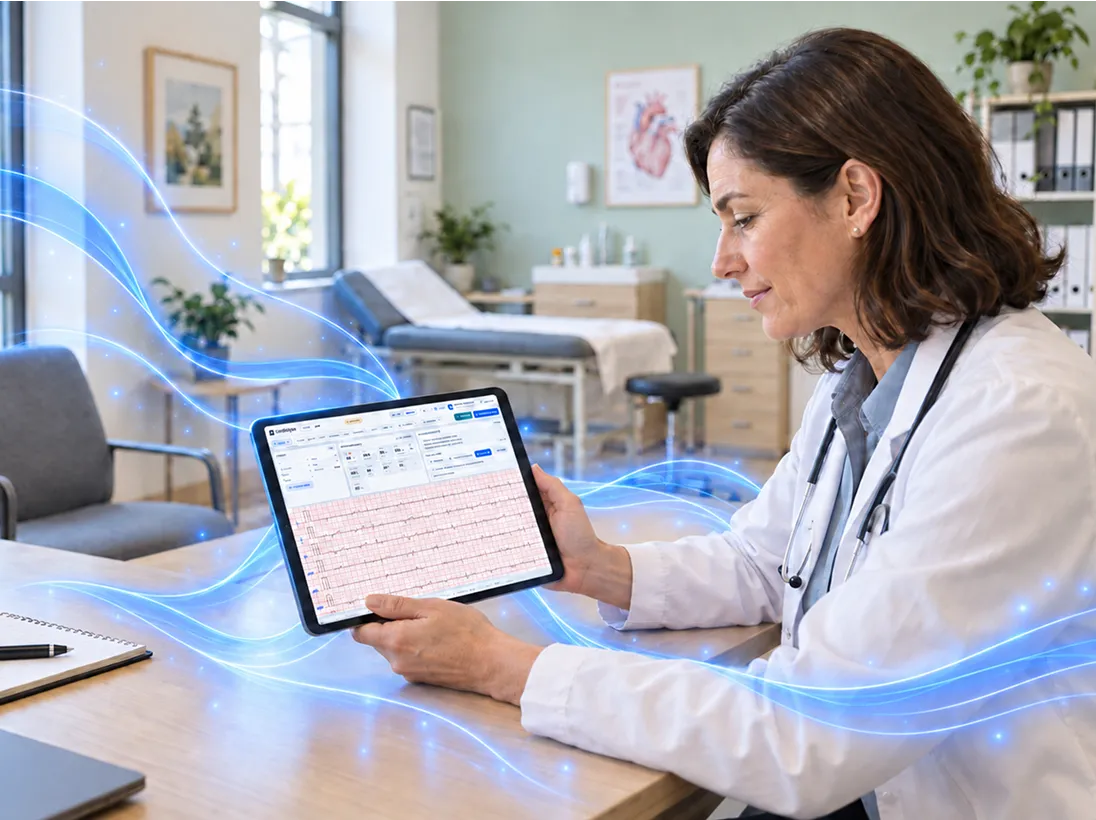
A female doctor in a white coat with a stethoscope examines an ECG reading displayed on a tablet in a clinical office with medical equipment and furniture.
30+ arrhythmias detected
CE Class IIa certified
API / SDK available
Resting ECG analytics
ECG Digitalization
Device-agnostic integration
30
+
Arrhythmias detected across resting & Holter ECG
CE IIa
Certified medical device software under EU Regulations
Days
Typical time to first production integration — not months
Any device
Works with any ECG source — clinical, Holter, or wearable
Trusted by our commercial and project partners

From raw signal to clinical decision — in under 30 seconds.

Any ECG source, any format. Our pipeline handles ingestion, preprocessing, AI interpretation, and clinician-ready reporting through one secure API.

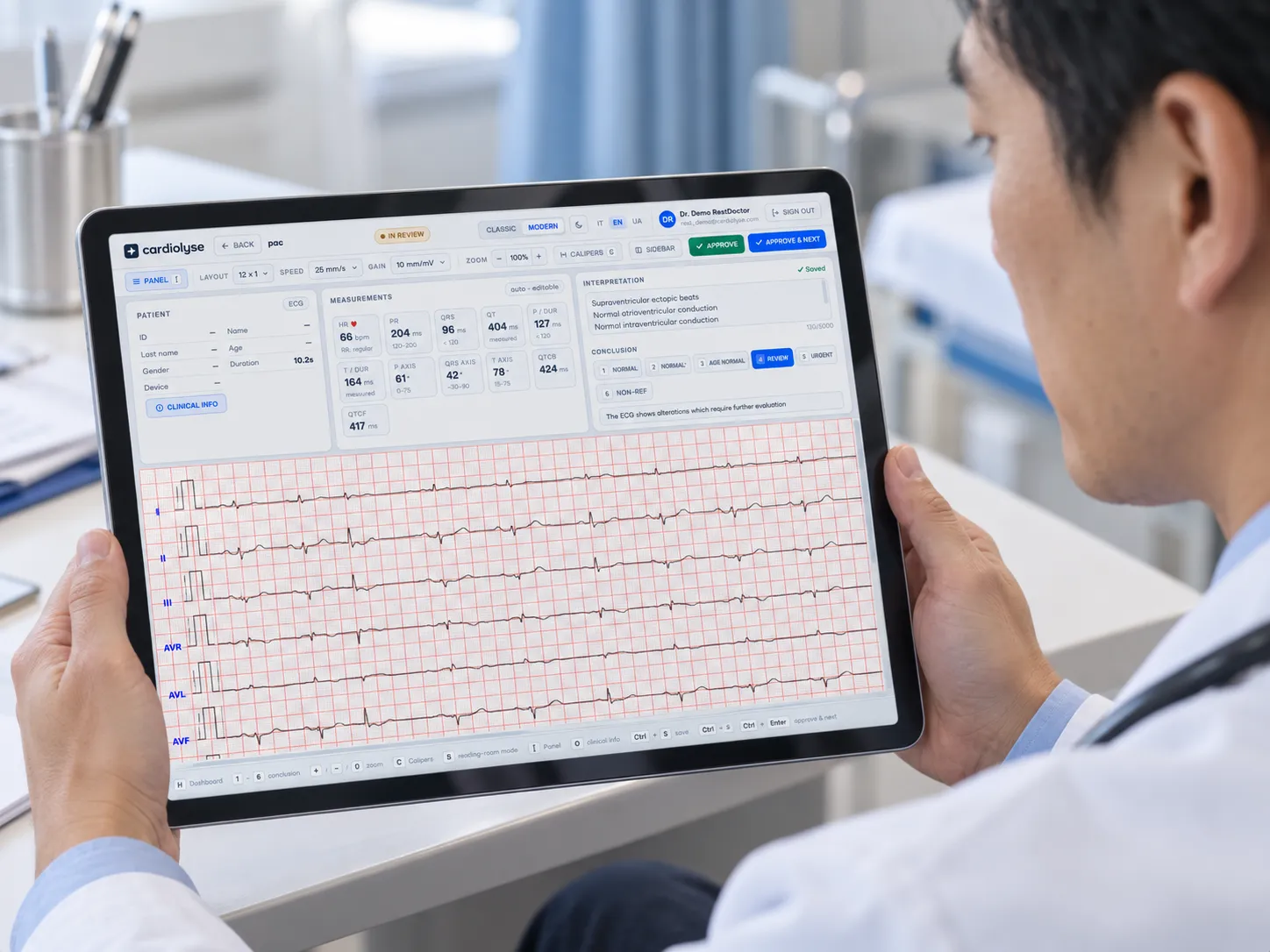
Doctor holding a tablet displaying an ECG report with heart rate and measurements, showing detailed heart activity with red gridlines and interpretation notes on the screen.
03
02
01

Ingest

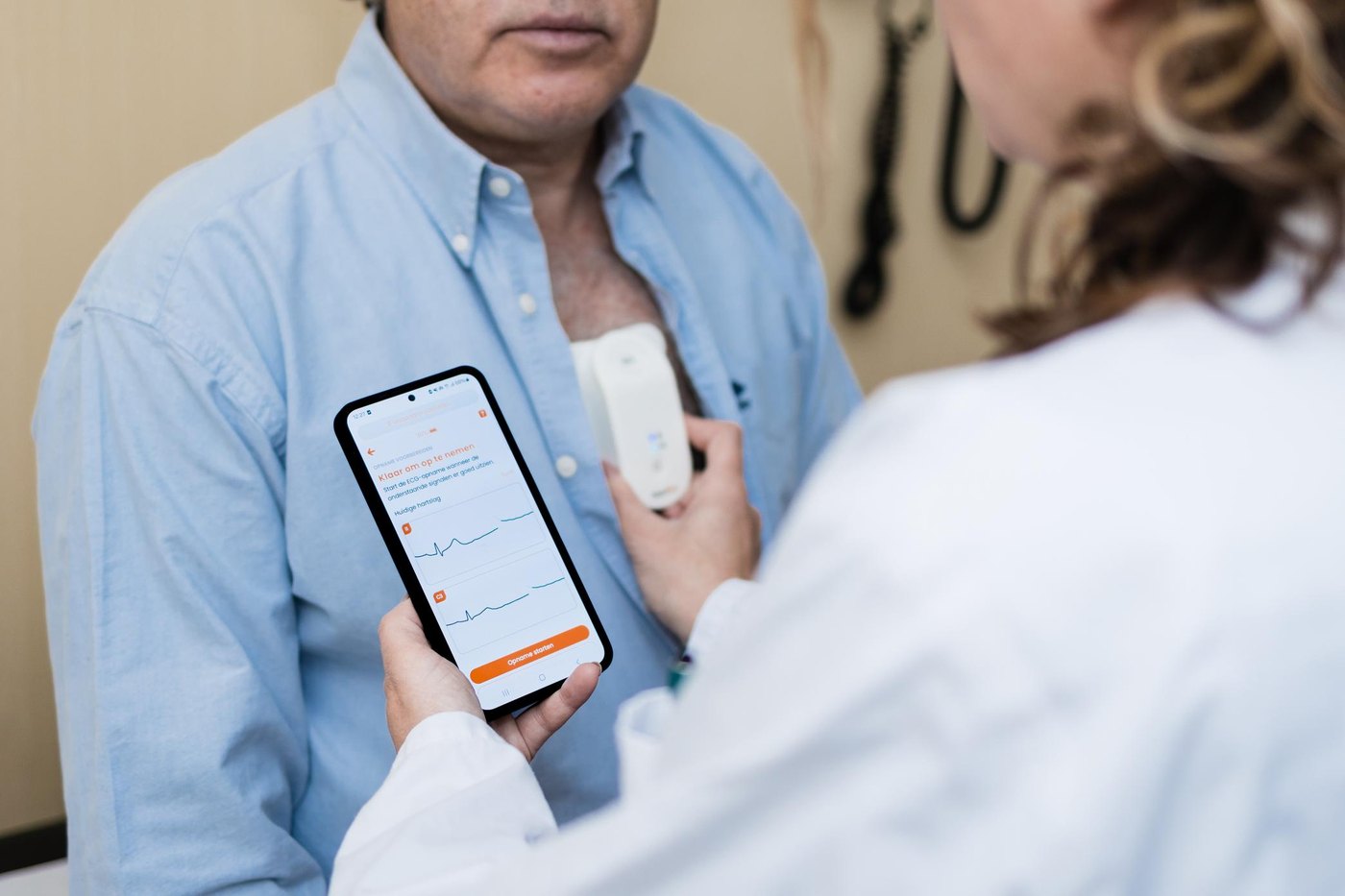
Upload ECGs from Heart monitors, 12-lead devices, consumer wearables, or your existing EHR. Supports all the most used data formats.

Analyze

Cardiolyse AI detects 30+ arrhythmias and heart abnormalities, computes HRV, and generates individual cardiovascular risk scores.

Report

Clinicians receive a structured, annotated report in seconds with the ability to adjust the findings. Exportable to PDF, HL7 FHIR, or embedded directly into your telecardiology workflow via API.

Built for cardiology teams. Not for demos.

Over a decade of clinical R&D, more than 1 million ECGs analysed, and direct feedback from cardiologists across Europe.

Decision-supporting Workflow

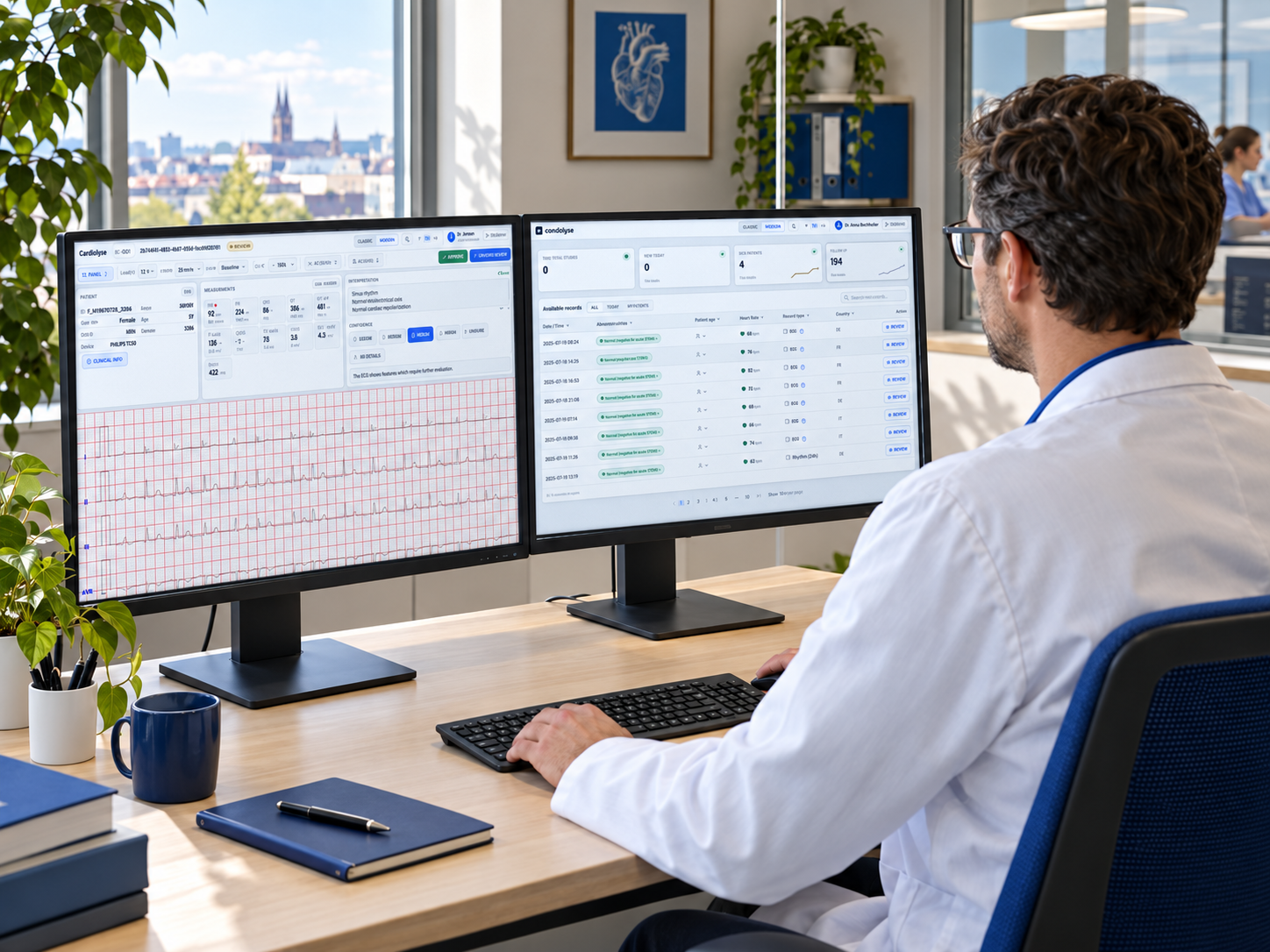
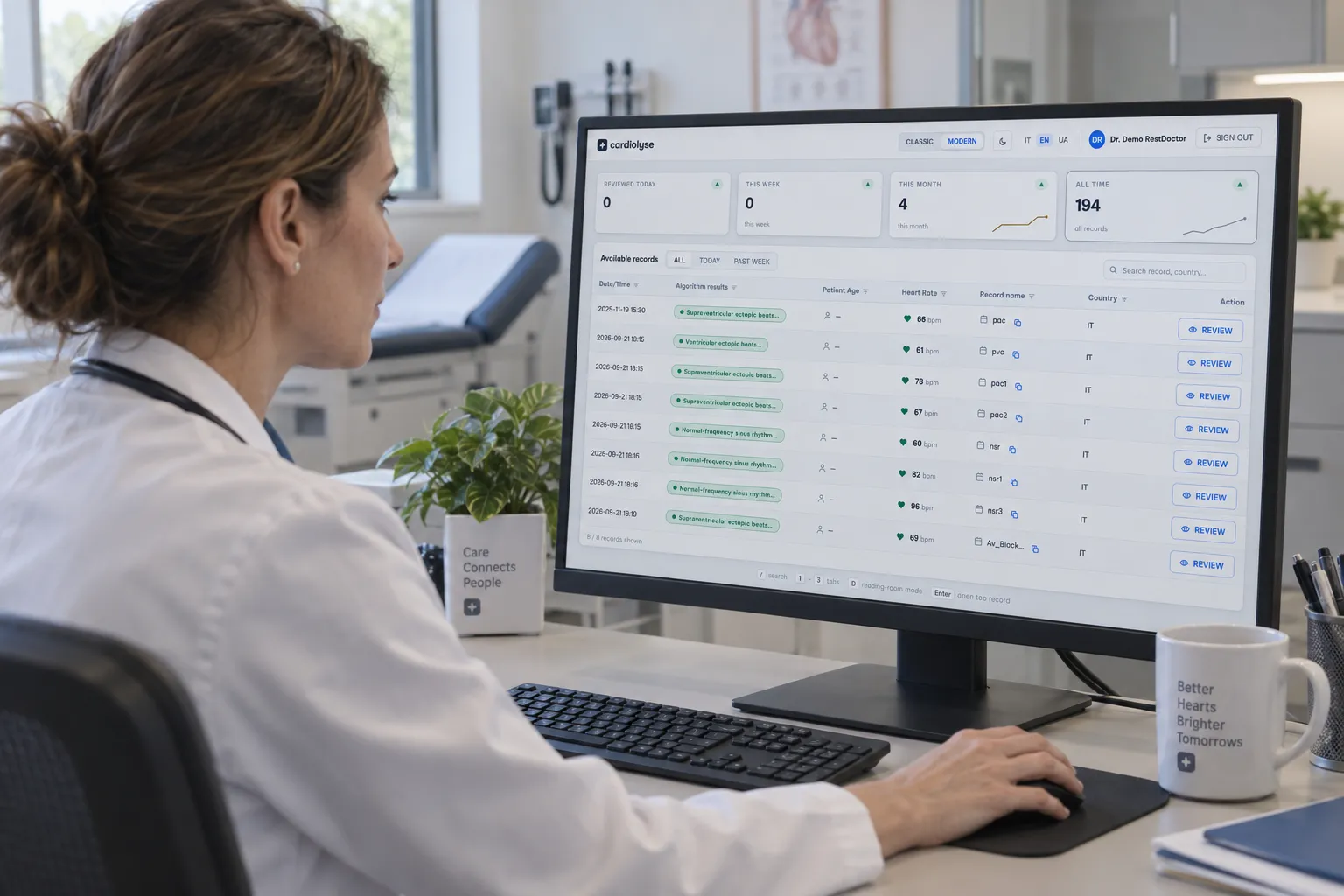
A smoothly running web dashboard allows doctors to work more effectively, supporting easy report approvals and adjustments.
Female doctor in a white coat sits at a desk using a desktop computer displaying cardiolyse software with patient heart rate records and analysis results in a medical office.
30+ arrhythmia classes
AFib, AFlutter, PVCs, PACs, SVT, VT, bradycardia, bundle branch blocks, and more — trained on multi-center, expert-labeled datasets.
Multi-device ingestion
Home-use single-lead ECGs or wearables, 12-lead hospital devices — one pipeline, adjustable report format.
REST API integration
Drop-in integration with EHRs, telecardiology platforms, and consumer health apps. Standards-first SDKs.
Structured reporting
PDF, HL7, JSON, DICOM-SR. Clinician-signed, auditable, exportable to any downstream system in your stack.

Different audiences. One clinical-grade solution.

Whether you are a cardiologist reading ECGs, a hospital scaling remote monitoring, or a device maker embedding AI, Cardiolyse fits your workflow, not the other way around.

For Clinicians

Read ECGs in seconds

Automatic pre-classification of every beat, waveform annotations, and an editable report you sign — not one you rebuild from scratch.

  • Any lead count and any duration
  • Auto-generated draft reports
  • Full editable annotations
For health systems

Scale cardiac care beyond your walls

Deploy Cardiolyse across ambulatory, remote-monitoring and telehealth workflows with one enterprise contract and one API.

  • Enterprise SSO & audit logs
  • Regional data residency (EU)
  • Volume-based pricing
For device makers

Add more value to your users

A regulatory-ready ECG analysis backend behind your device or app — CE-marked algorithms, white-label reporting and OEM licensing.

  • White-label REST / SDK integration
  • Co-badged CE technical file support
  • OEM licensing models

Evidence, not marketing.

Cardiolyse is built on more than a decade of clinical R&D and validated in collaboration with cardiologists and research centres across Europe.

10
+
Years of clinical R&D in ECG and HRV analysis
1
M+
ECGs analysed by the Cardiolyse platform to date
300
Vital ECG parameters extracted per recording
CE
Class IIa medical device software under EU Regulations

Built to medical-device standards. Audited. Certified

Cardiolyse is not a research prototype. It is a documented, audited medical device operating under EU Regulations, ISO 13485 quality management, and ISO 27001-aligned information security, certified by NHS Digital for Data Security and Protection compliance.

CE

CE-marked · Class IIa

Cardiolyse is CE-marked as Class IIa medical device software under EU Regulations. Technical file and clinical evaluation available under NDA.

Jurisdiction
European Economic Area
Class
IIa
ISO

ISO 13485 · GDPR

Certified quality management system for medical devices and full GDPR compliance for the processing of health data across the EU.

Quality
ISO 13485:2016
Privacy
GDPR & HIPAA-aligned
NHS

NHS Digital DSP Toolkit

Certified by NHS Digital for Data Security and Protection compliance, meeting the standards required to handle patient data within the UK National Health Service.

Standard
Data Security &
Protection Toolkit
Jurisdiction
United Kingdom
(NHS)

Trusted across preventive cardiology, medical devices and clinics.

Real users. Real workflows. Real clinical impact.

" In preventive cardiology, we cannot wait for a cardiac event to act. Cardiolyse gives us the ECG analytics we need to detect subtle risk signals early, at scale, and to build genuinely personalised prevention protocols. "
Man with dark hair and glasses wearing a white lab coat and dark tie, smiling slightly against a plain light background.
Dr. Massimo Gualerzi
Cardiologist · The Longevity Suite Clinics
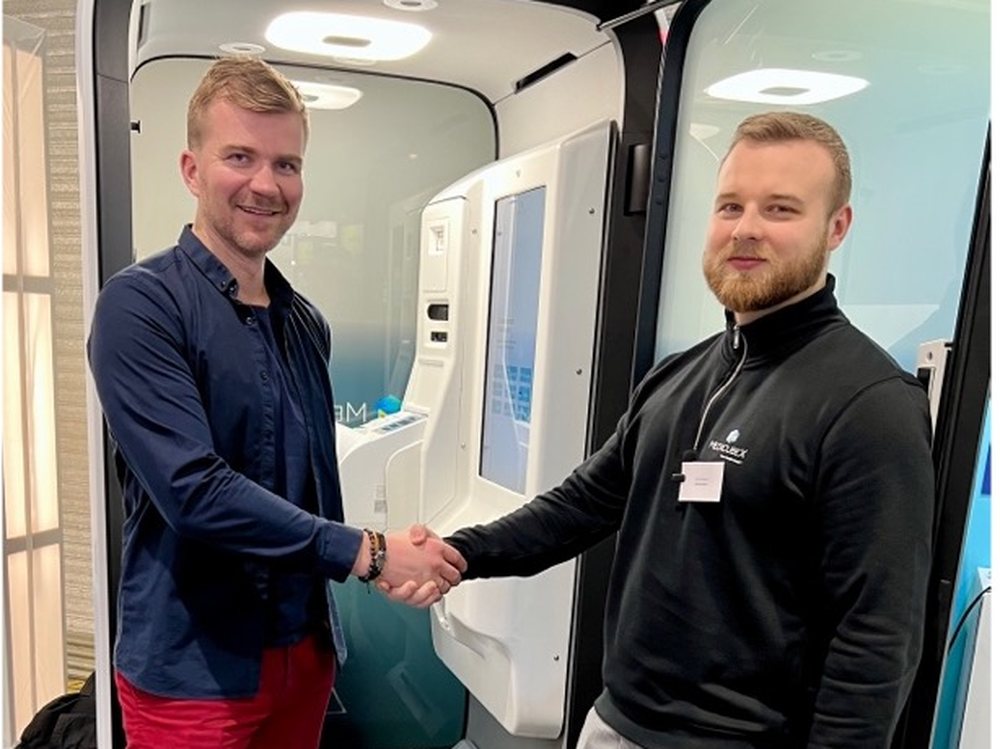
" Embedding Cardiolyse's single-lead ECG algorithms into the MedicubeX eHealth Station gave us clinically credible cardiac analytics out of the box — the kind of interpretation our medical users trust when a patient does a self-check. "
Smiling bearded man with light hair wearing a black zip-up top with the MedicubeX logo and slogan 'Your Health Inside'.
Vili Kostamo, MD
Medical Doctor · CEO, MedicubeX
" Cardiolyse offers customers a clean REST API on the integration side, and a web dashboard that cardiologists enjoy using and that supports their remote ECG workflow. "
Smiling man with glasses, a beard, and short hair wearing a gray sweater over a light blue collared shirt standing indoors against a dark background.
Pekka Pirttiaho
VP Business Development · Cardiology Centre

Everything your CIO will ask about.

Cardiolyse is engineered for hospital-grade deployment — secure, interoperable, and built to fit your existing stack rather than replace it.

Supported inputs

Any ECG source

  • 1-, 3-, 6-, and 12-lead ECG
  • Any duration ECGs
  • EDF, XML, PDF, DICOM-ECG, PNG
  • Consumer wearables (Apple, Withings, KardiaMobile)
AI capabilities

300+ Biomarkers

  • Rhythm classification (30+ arrhythmias)
  • ST-segment abnormality detection
  • Heart-rate variability & time-domain metrics
  • Cardiolyse Wellness Risk Scores
Integration

API-first

  • Easy REST API integration
  • Fully documented process
  • Tech support for integration
  • Customization and specific integration options
Deployment

Cloud or on-premises

  • EU-hosted managed SaaS (default)
  • Private VPC deployment
  • On-premises container option
  • 99%+ SLA · uptime status page
Security

ISO 27001 · NHS DSP

  • ISO 27001-aligned information-security controls
  • NHS Digital Data Security & Protection compliance
  • SSO, MFA, role-based access control
  • Full audit trail, tamper-evident logs
Compliance

CE · GDPR

  • CE-marked medical device software · Class IIa
  • ISO 13485:2016 quality system
  • GDPR-compliant data processing (EU DPA)
  • HIPAA-aligned architecture

Research notes, product updates, and clinical stories.

The Cardiolyse team publishes regularly on validation, deployment lessons, and the state of AI in cardiology.

Answers before your next question.

The six questions we hear most from clinicians, device manufacturers and pharma teams evaluating Cardiolyse. For everything else, see the full FAQ.

Is Cardiolyse analytics a medical device?

Yes. Cardiolyse is a CE-certified medical device software under EU Regulations. Our ECG & HRV analytics module is intended for use by qualified healthcare professionals as decision support alongside clinical judgement — not as an autonomous diagnostic system.

Which ECG devices and data formats does it work with?

Cardiolyse is device-agnostic. We ingest signals from resting 12-lead ECGs, Holter monitors, patch recorders, and medical-grade wearables. Supported inputs include standard EDF, DICOM-ECG, HL7 aECG, XML exports, and other raw sample streams. Paper and PDF ECGs can be digitized through our ECG digitization pipeline.

How does the API integrate with our EMR or device firmware?

We provide secure REST API access. Typical integration: your EMR or device sends the ECG payload; Cardiolyse returns structured measurements, interpretations, and risk scores in JSON, plus an optional PDF report and FHIR-compatible resources for downstream systems.

Where is patient data stored?

All patient data is processed and stored in EU data centres, in line with GDPR and the EU regulatory post-market surveillance requirements. Cardiolyse operates a documented information-security programme aligned with ISO 27001 principles and is certified by NHS Digital for Data Security and Protection compliance, with encryption in transit and at rest, role-based access, audit logging and data-processing agreements (DPAs) available for every customer.

Do you support pharma clinical trials?

Yes. We support Phase I–IV cardiac safety and endpoint programmes with centralised ECG reading, automated measurement, arrhythmia adjudication support, QT/QTc analysis and blinded review workflows. Studies benefit from consistent, reproducible measurements across sites, protocol-configured escalation rules and audit-ready exports. See Clinical Trials & Pharma for the full scope.

How do we start — pilot, PoC, or full deployment?

Most customers begin with a scoped proof of concept: 2–4 weeks, a defined ECG dataset or device stream, and clear criteria agreed up front. A successful PoC moves into a paid pilot (typically 8–12 weeks) with API integration and clinical validation, then into a commercial rollout. Pharma sponsors start directly at a study-specific Statement of Work. We can usually align on a plan within a week of the first call.

Answers before your next question.

The six questions we hear most from clinicians, device manufacturers and pharma teams evaluating Cardiolyse. For everything else, see the full FAQ.