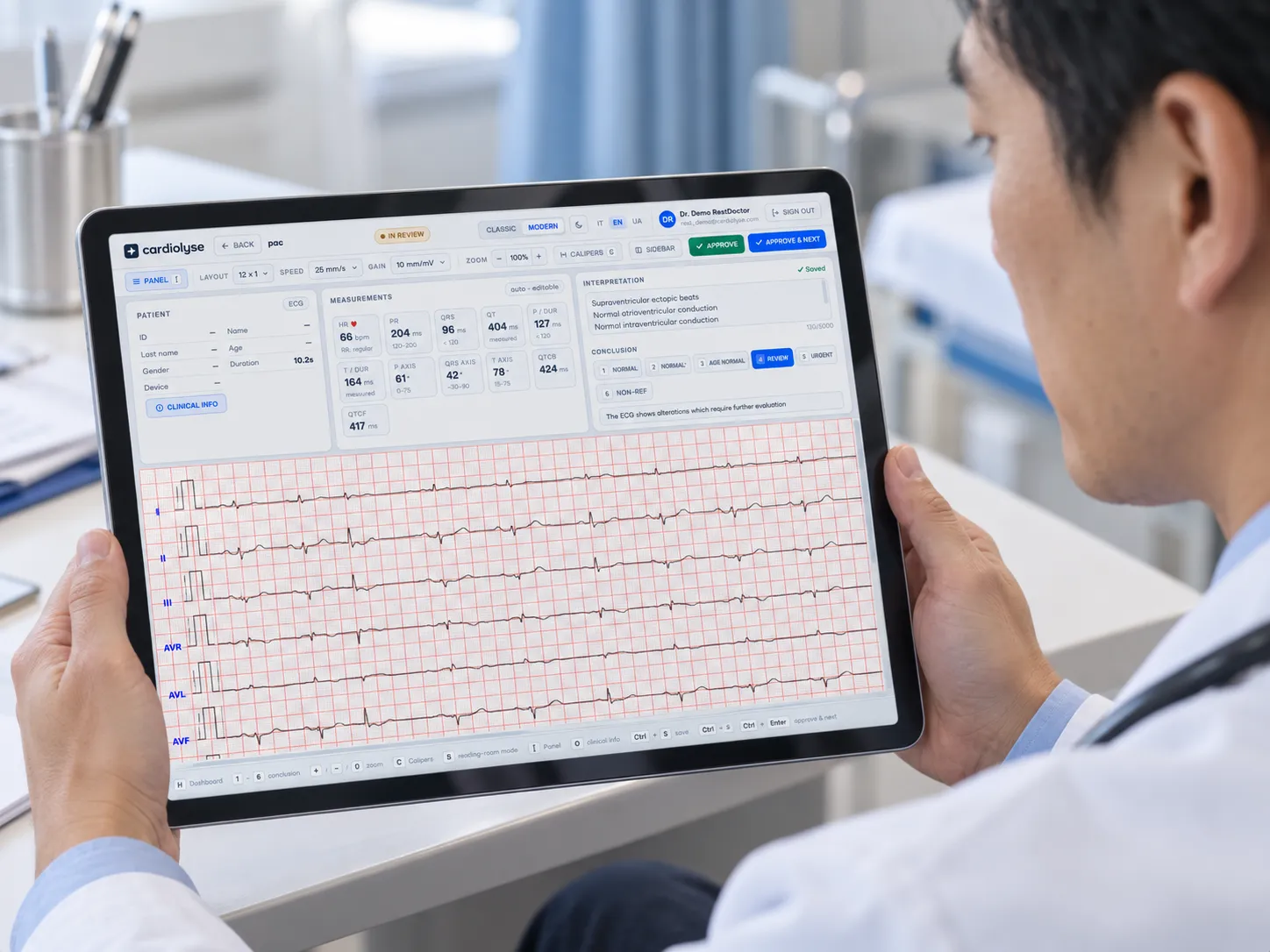
Cardiolyse is a device-neutral, CE-marked ECG AI engine. Call it through our EU-hosted cloud API, or run the same certified engine as a container inside your customer's cloud or data centre — and turn any 1- to 12-lead recording from your monitor, wearable, patch or Holter into structured, clinician-ready findings.
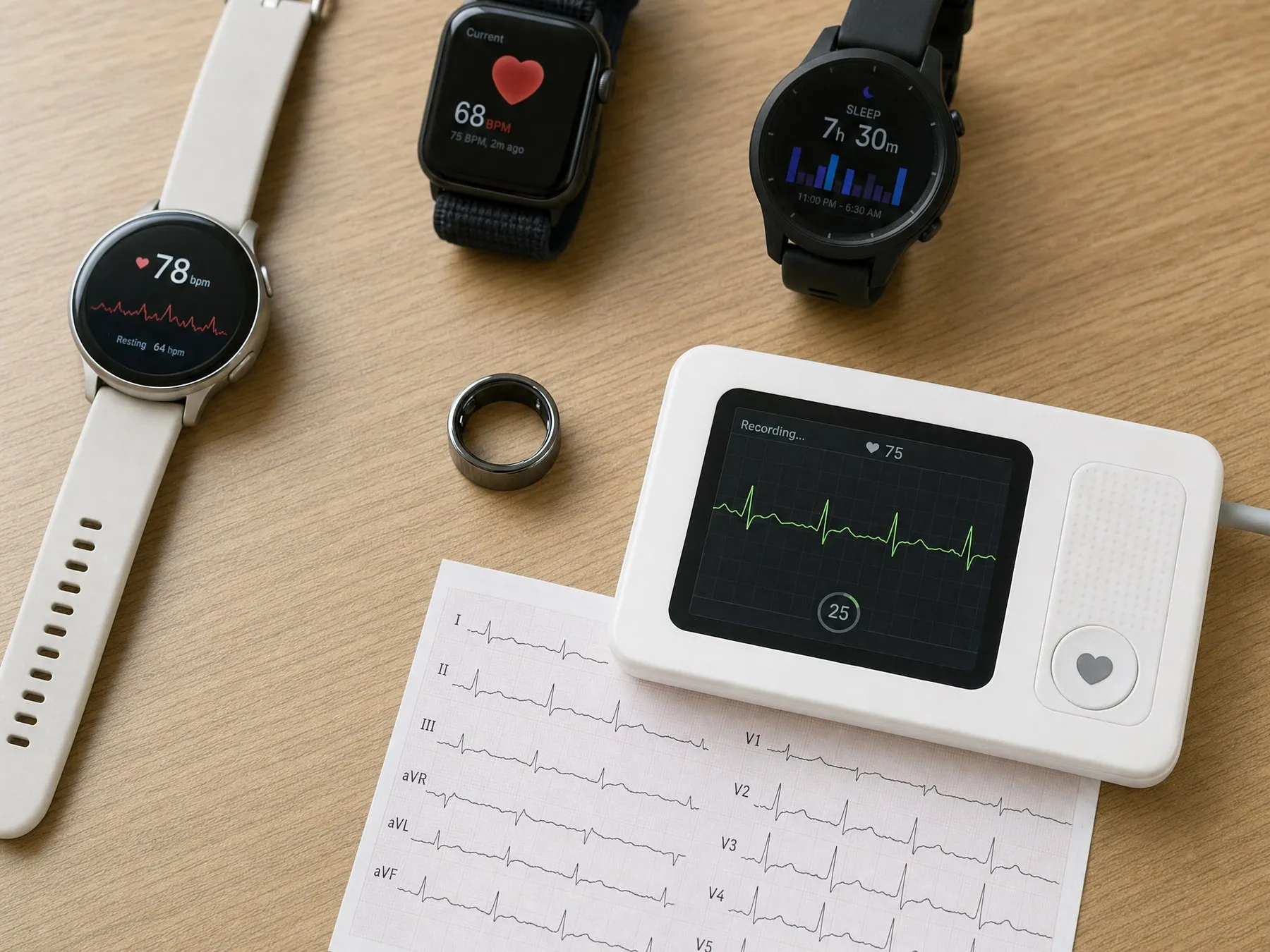
Certified ECG AI is expensive to build, harder to certify and even harder to maintain at clinical quality. Cardiolyse ships you the interpretation layer — you keep your device, your customer relationship and your brand.
Two hosting options for the same certified analysis engine. Pick the one that fits your customer's data-handling policy and connectivity model — the clinical output is identical, and Cardiolyse always runs as a service, never as embedded software on the device.
Point your product at Cardiolyse's EU-hosted REST API and start returning interpretations in days. No infrastructure to run, no models to retrain, no regulatory rework — you consume a certified service.
Deploy the same certified analysis engine as a container inside your customer's cloud, VPC or hospital data centre. Ideal for IT teams that require ECGs never leave their network, and for national deployments with sovereignty rules. The engine still runs as a service — it is not embedded in the device.
The same integration pattern applies whether you ship a patch, a Holter, a consumer wearable or a 12-lead diagnostic ECG cart.

Your device records ECG signal — 1 to 12 leads, at your native sampling rate — and packages it in any common format.
Post the recording to the Cardiolyse REST API — our EU cloud, or the container running in your customer's cloud. Authentication is per-tenant, per-device or per-clinician.
The certified engine returns up to 300 vital ECG parameters, HRV metrics, arrhythmia labels and a Personal Baseline Score.
Consume the structured JSON in your app, or render the Cardiolyse PDF report inside your product — under your brand.
Not every device team wants to build a full clinician UI. Bundle the Cardiolyse web dashboard so your customers get a ready-made review, sign-off and reporting surface out of the box — with white-label options for your brand.


Two ways, both service-based — the engine is not deployed on the device itself. (1) Call our EU-hosted REST API directly from your device or backend — full documentation at api.cardiolyse.com/docs. (2) Deploy the same certified engine as a container inside your customer's cloud, VPC or data centre. The API contract is identical in both modes.
The API ingests 1 to 12 leads at your device's native sampling rate. We support EDF, XML, DICOM-ECG, PDF and common proprietary vendor formats. Output is structured JSON — waveform-parameter measurements, arrhythmia labels, HRV metrics and risk scores — with a signed PDF report. Additional standards-based output formats are available for teams that need them; our integrations team maps the schema to your downstream system.
Yes. We ship the same certified analysis engine as a container image, deployable on Docker or Kubernetes inside your customer's cloud, VPC or data centre. Air-gapped installations are supported for hospitals and public-sector customers with strict data-residency requirements. The engine runs as a service in that environment — it is not deployed on the device itself.
Yes. Cardiolyse is CE-marked as Class IIa medical device software under EU Regulations. We operate under an ISO 13485 quality management system, so your regulatory affairs team receives a documented, auditable AI component — including declarations of conformity — to include in your device's technical documentation.
The algorithm is validated across 1- to 12-lead configurations on data from wearables, patches, Holter monitors, and diagnostic ECG carts. Performance benchmarks by device class are available under NDA on request.
Yes. White-labeling and co-branding are possible. The Cardiolyse web dashboard can be delivered under your brand — custom logo, colour palette and domain — so your clinician-facing users see one coherent product experience.
We license per active user, per analysed recording, or under enterprise volume agreements — depending on your product economics. Talk to us and we'll size a model that fits your device pricing.